Minor and Major Car Servicing

When you skip a service interval, you're not just postponing maintenance—you're setting off a chain reaction of damage. An overdue oil change means your engine runs with degraded lubricant, increasing friction and wear on internal components. That friction accelerates damage to pistons, cylinders, and bearings, transforming a $100 service into a $3,000+ engine rebuild.
For Carrum Downs and Frankston drivers tackling daily commutes with stop-start traffic, engine strain is constant. A neglected cooling system that should have been flushed during service can overheat, warping the cylinder head—a repair that costs $2,500 or more. What started as a preventative service becomes catastrophic engine damage.
Transmission fluid degradation follows the same pattern. Skip your transmission service, and the fluid loses its ability to protect gears and bearings. Friction multiplies, seals fail, and you're facing a $4,000 to $8,000 transmission replacement instead of a $300 fluid service.
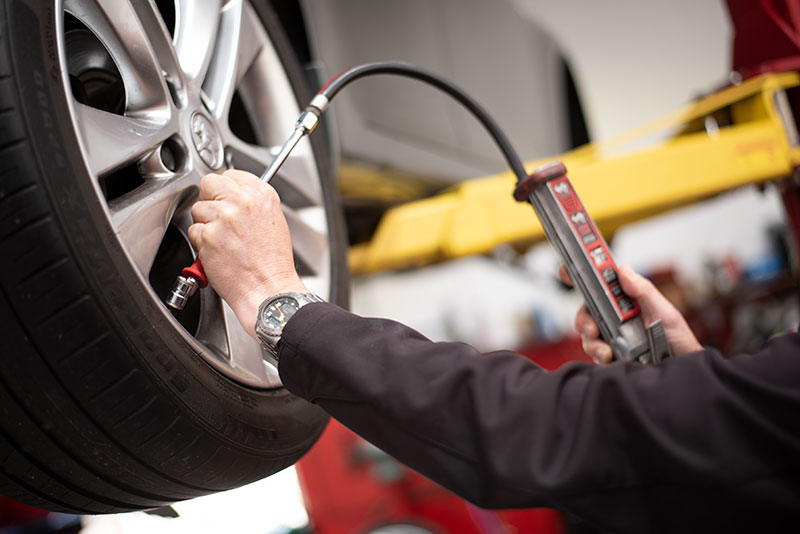
Brake wear happens gradually, but skipping brake inspections during service hides dangerous deterioration. Worn brake pads go undetected, allowing metal-to-metal contact that damages rotors and calipers. A $200 pad replacement becomes a $800+ rotor and caliper job. Worse, brake failure risk increases on Frankston's busier roads, turning a maintenance cost into a safety liability.
Suspension and steering components age silently. Regular servicing includes checks for worn bushings, ball joints, and tie rods—parts that absorb punishment from Carrum Downs' road surfaces. Miss these checks, and small wear becomes alignment problems, uneven tyre wear, and handling issues. A $150 suspension inspection could have prevented $1,200 in damage and dangerous driving conditions.
Air conditioning systems also suffer from neglected servicing. Refrigerant leaks go undetected, and compressors work harder to compensate. The system eventually fails completely, requiring a $1,500 to $2,500 replacement—money that a $150 annual service would have saved.
Consider a typical Frankston driver who skips two years of servicing. Year one: the oil becomes sludgy, engine temperature climbs, and the cooling system shows early signs of failure. Year two: the engine overheats, warping the cylinder head. Repair bill: $3,500. The original $400 in skipped oil changes just cost $3,500 in actual repairs.
Another example: a Carrum Downs commuter ignores steering and suspension warnings during skipped services. Worn components go undetected for 18 months, causing uneven tyre wear and alignment drift. Tyres fail prematurely ($600), alignment correction ($300), suspension repairs ($1,200). Total damage from skipped maintenance: $2,100, when a yearly $250 suspension service would have caught issues early.
Fleet managers in the area understand this lesson painfully well. A single vehicle with skipped services generates more downtime, more emergency repairs, and lost productivity. What costs $500 in preventative maintenance becomes $5,000 in reactive repairs and business disruption.
Neglected servicing doesn't just create repair bills—it drains your fuel tank and wallet simultaneously. A poorly maintained engine works harder to generate the same power, consuming 10-20% more fuel. For Frankston drivers commuting daily, this inefficiency adds up to $600+ annually in wasted fuel, stacking on top of the eventual repair costs.
Your vehicle's resale value collapses without service history. Potential buyers see missing service records as a red flag for hidden damage. A well-maintained car might sell for $15,000; the same car with gaps in servicing records sells for $10,000 or less. That $2,000 you saved on skipped services costs you $5,000 when you sell.
Insurance companies also scrutinize service records. Damage from neglected maintenance may be excluded from claims, and some policies increase premiums for poorly maintained vehicles. A minor accident in a well-serviced car is one claim; the same accident in a neglected car becomes a dispute over whether poor maintenance contributed to the damage.